

Provider · Mercure Concierge Medicine · San Francisco
You finish a meal and within minutes your stomach swells, you feel uncomfortably full, and the pressure just won't quit. Or maybe it's not even related to food — you wake up bloated, you're gassy at inconvenient times, and nothing about your digestion feels predictable anymore. You've probably Googled it. You've maybe even cut out gluten, dairy, or "whatever the internet said this week." And yet here you are, still bloated, still frustrated, still wondering what's actually going on. Let's decode it.
Bloating is your body's way of waving a flag — it's telling you something in your digestive system isn't working optimally. The problem is, that "something" could be coming from a dozen different directions, which is exactly why a one-size-fits-all elimination diet rarely solves the problem long-term.
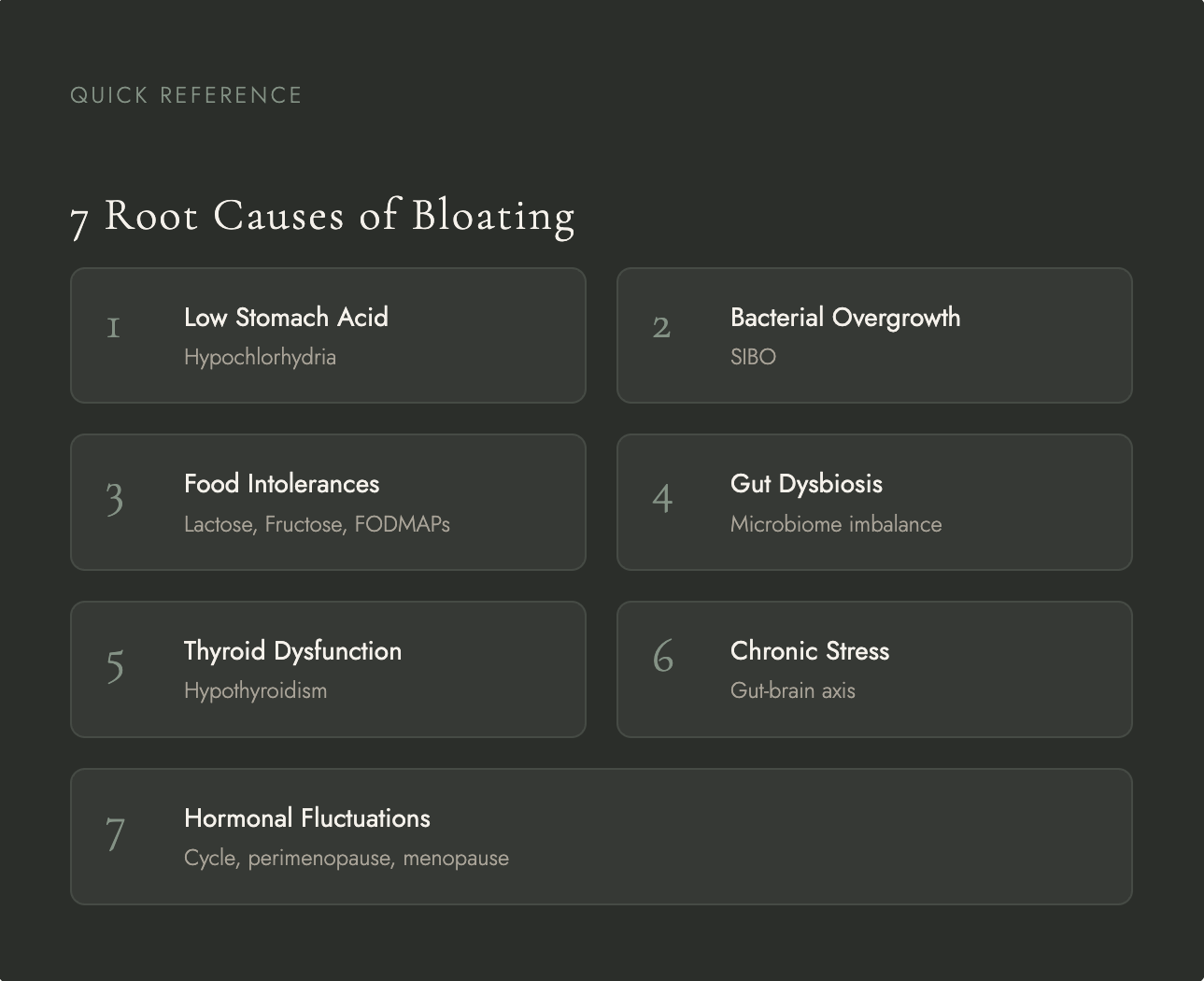
01
Low Stomach Acid (Hypochlorhydria)
This one surprises a lot of people. We live in a culture that assumes digestive issues mean too much acid — hence the billion-dollar antacid industry. But in reality, many people, especially as they age or under chronic stress, produce too little stomach acid.
When stomach acid is low, food doesn't break down properly before reaching your small intestine. Undigested food ferments, gas builds up, and bloating follows. Research shows that reduced stomach acid allows ingested bacteria to survive and reach the small intestine, where the less acidic environment fosters their proliferation.
Damianos et al., The Lancet Gastroenterology & Hepatology, 2026
You may also notice:
Feeling full very quickly during meals
Burping or reflux shortly after eating
Undigested food in your stool
Nutrient deficiencies despite eating well
What to do: Before reaching for an antacid, it's worth testing whether low acid is actually the issue. A provider can help evaluate this properly.
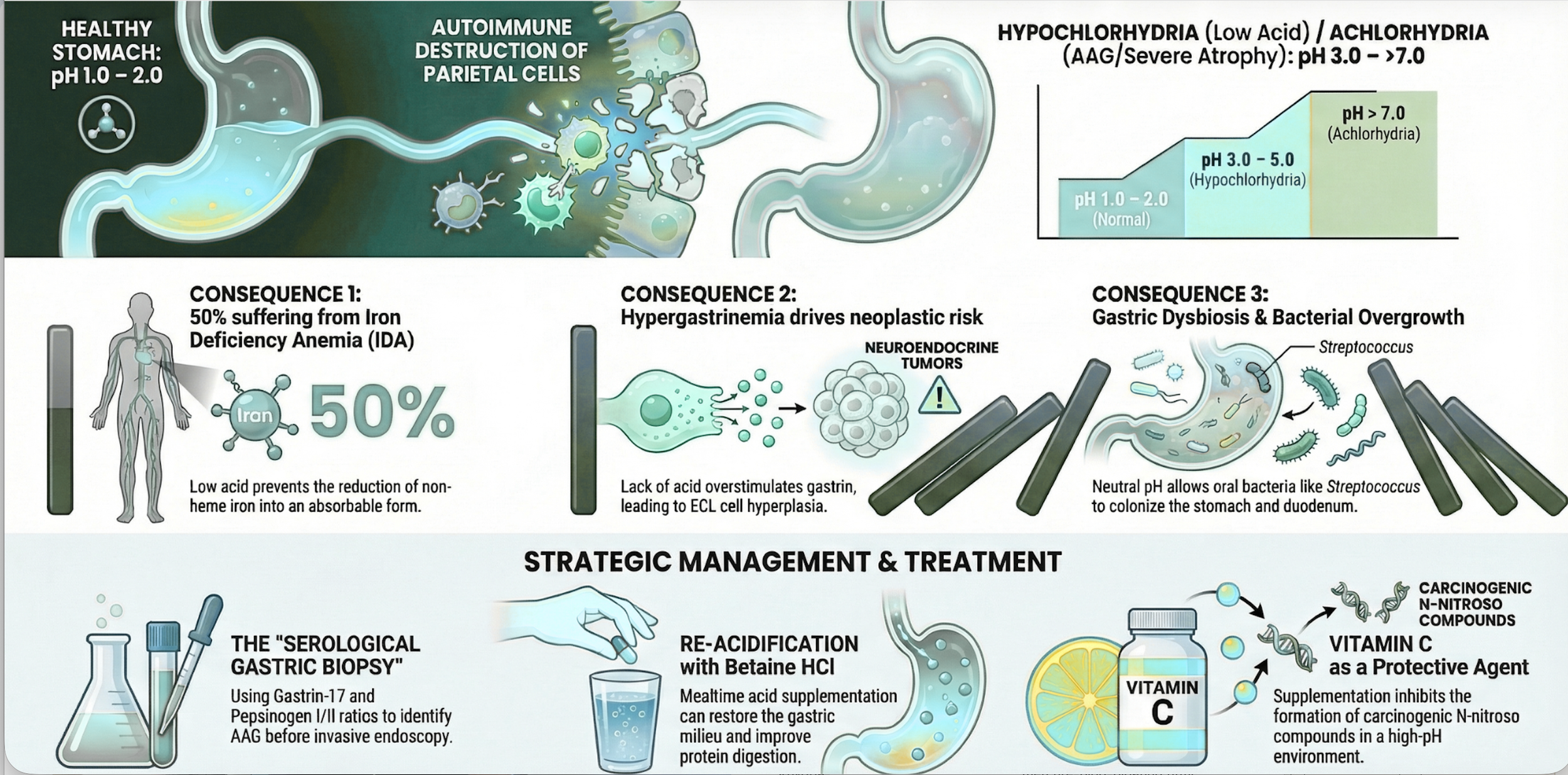
Hypochlorhydria — consequences of low stomach acid and strategic management options
02
Small Intestinal Bacterial Overgrowth (SIBO)
SIBO occurs when bacteria that should live in your large intestine migrate and overpopulate your small intestine. The ACG defines it as "a clinical syndrome of GI symptoms caused by the presence of excessive numbers of bacteria within the small intestine," noting that bloating is its most prominent symptom.
Pimentel et al., American Journal of Gastroenterology, 2020
SIBO is far more common than most people realize and is frequently missed because it requires specific breath testing to diagnose. Common signs alongside bloating:
Alternating constipation and diarrhea
Nausea
Fatigue after meals
Food sensitivities that seem to multiply over time
Testing available: SIBO breath testing can be ordered directly through Mercure. Ask about our GI-MAP comprehensive stool analysis as well.
03
Food Intolerances
Food intolerances are dose-dependent, delayed reactions — not the immediate immune response of a true allergy. The AGA notes that fructose intolerance is actually more common than lactose intolerance among patients with functional GI disorders, affecting up to 60% of patients studied.
Moshiree, Drossman & Shaukat, Gastroenterology, 2023
The most common offenders:
Lactose — the body lacks sufficient lactase enzyme to break down milk sugar
Fructose — found in fruit, honey, high-fructose corn syrup, and many "healthy" foods
FODMAPs — fermentable carbohydrates in garlic, onions, wheat, legumes, and apples
Gluten — in those with non-celiac gluten sensitivity or celiac disease
Note: Intolerances can develop over time. You may have eaten a food for years with no issue and suddenly find it no longer agrees with you.
04
Gut Dysbiosis
Your gut is home to trillions of bacteria, fungi, and other microorganisms — your microbiome. When the balance between beneficial and harmful microorganisms shifts, it's called dysbiosis, and it can significantly disrupt digestion.
Dysbiosis can develop from:
Repeated antibiotic use
A diet high in processed foods and low in fiber
Chronic stress
Certain medications including proton pump inhibitors and NSAIDs
Beyond digestion: Mood changes, skin issues, and immune dysregulation can all be downstream effects of a disrupted microbiome.
05
Thyroid Dysfunction
An underactive thyroid slows everything down — including digestion. Research confirms that gastrointestinal motility symptoms are closely related to thyroid disease and that gastric emptying may be delayed in hypothyroidism.
Xu et al., Frontiers in Physiology, 2024
A 2025 study found that people with hypothyroidism had significantly higher rates of SIBO compared to matched controls — another reason these two conditions are worth evaluating together.
Wei et al., Journal of Clinical Endocrinology and Metabolism, 2025
Watch for: If bloating is accompanied by fatigue, weight changes, cold intolerance, hair loss, or brain fog — thyroid function is worth evaluating.
06
Chronic Stress & the Gut-Brain Axis
The gut and brain are in constant two-way communication via the vagus nerve. Research published in The Lancet describes how alterations in epithelial barrier function, caused by immune system disturbances and microbiome changes, regulate gut-brain communication via the hypothalamic-pituitary-adrenal axis.
Ford et al., Lancet, 2020
Many people notice their digestive symptoms are significantly worse during high stress — and this isn't in their head. It's physiology.
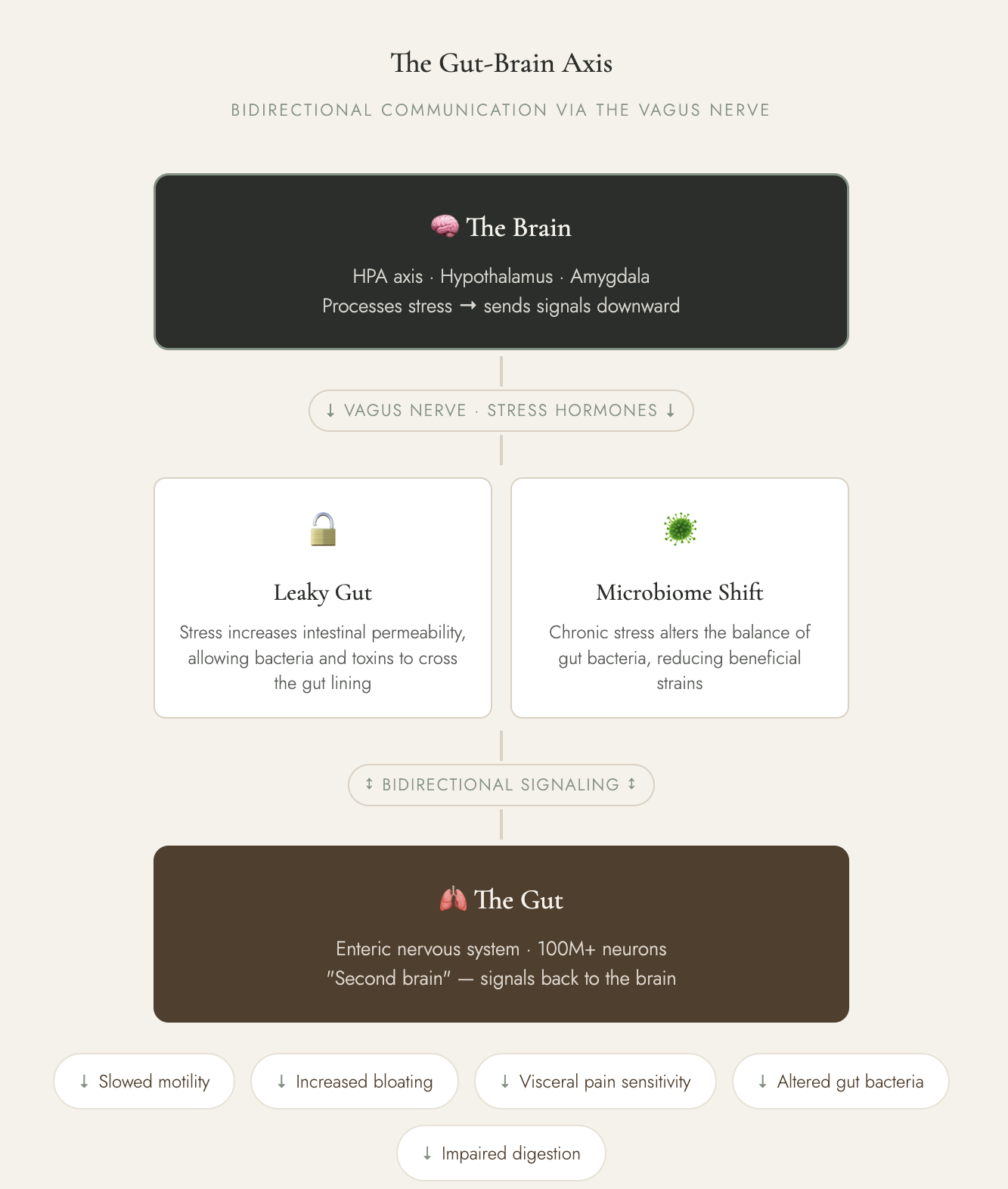
Chronic stress doesn't just cause anxiety — it physically changes how your gut functions.
Managing stress is a legitimate part of treating digestive symptoms.
07
Hormonal Fluctuations
For those with menstrual cycles, bloating that intensifies in the luteal phase (the two weeks before your period) is extremely common. Progesterone slows gut motility, and estrogen fluctuations affect water retention and gut sensitivity.
Perimenopause and menopause bring their own digestive shifts as hormonal changes alter the microbiome and gut function. This is a frequently overlooked driver of new-onset digestive symptoms in midlife.
So What Should You Actually Do?
Random elimination diets and over-the-counter supplements can provide temporary relief, but they rarely address the root cause. Persistent or worsening bloating deserves a proper workup.
In a concierge setting, we have the time and access to actually investigate — looking at comprehensive stool analysis, SIBO breath testing, food sensitivity panels, thyroid function, hormonal patterns, and more — rather than defaulting to "just avoid gluten and take a probiotic."
Your symptoms are telling you something. Let's figure out what.
When to Seek Evaluation Sooner
Unintentional weight loss
Blood in the stool
Bloating that is persistent and progressively worsening
Severe abdominal pain
New onset after age 50
Ready for real answers?
At Mercure, we take digestive health seriously — because we understand how profoundly gut function affects your energy, mood, immunity, and quality of life.
References
Damianos JA, Wang XJ, Camilleri M. Mechanisms and Pathophysiology Leading to Development of Small Intestinal Microbial Dysbiosis. Lancet Gastroenterology & Hepatology. 2026. doi:10.1016/S2468-1253(25)00295-X
Moshiree B, Drossman D, Shaukat A. AGA Clinical Practice Update on Evaluation and Management of Belching, Abdominal Bloating, and Distention. Gastroenterology. 2023;165(3):791-800. doi:10.1053/j.gastro.2023.04.039
Pimentel M, Saad RJ, Long MD, Rao SSC. ACG Clinical Guideline: Small Intestinal Bacterial Overgrowth. American Journal of Gastroenterology. 2020;115(2):165-178. doi:10.14309/ajg.0000000000000501
Xu GM, Hu MX, Li SY, et al. Thyroid Disorders and Gastrointestinal Dysmotility. Frontiers in Physiology. 2024;15:1389113. doi:10.3389/fphys.2024.1389113
Wei M, Mehravar S, Leite G, et al. Relationship Between Hypothyroidism, Risk of SIBO, and Duodenal Microbiome Alterations. Journal of Clinical Endocrinology and Metabolism. 2025. doi:10.1210/clinem/dgaf495
Ford AC, Mahadeva S, Carbone MF, Lacy BE, Talley NJ. Functional Dyspepsia. Lancet. 2020;396(10263):1689-1702. doi:10.1016/S0140-6736(20)30469-4
This blog is for educational purposes only and does not constitute medical advice. Please consult a qualified healthcare provider for personalized medical guidance.
© 2026 Mercure Concierge Medicine · San Francisco, CA
